
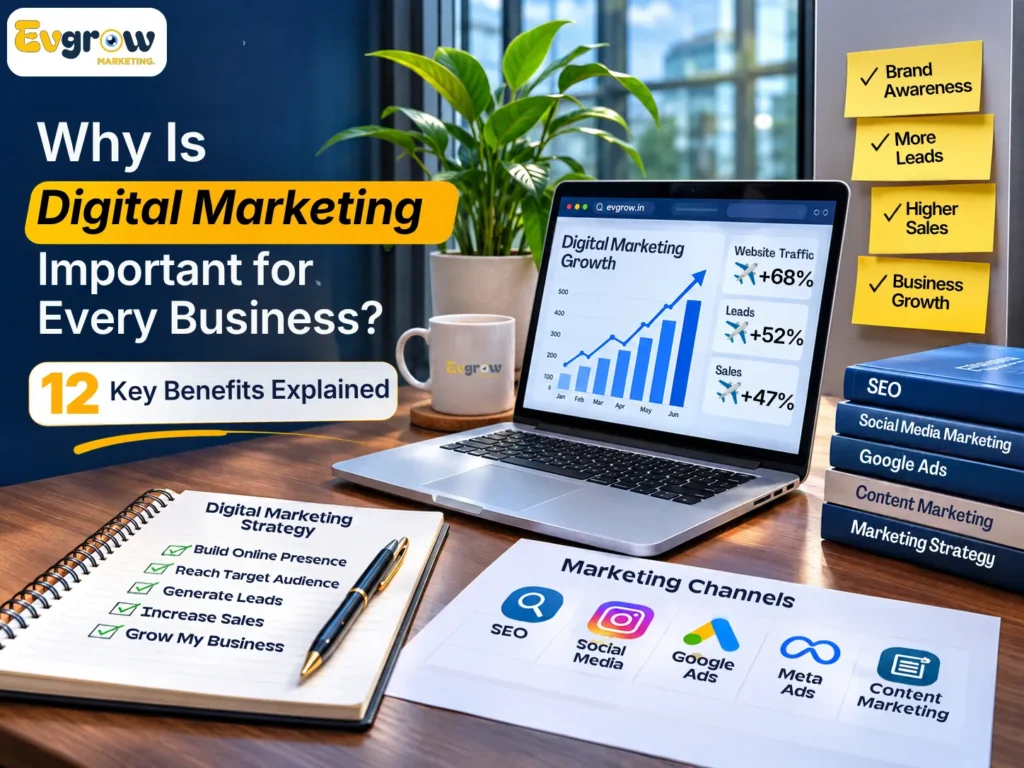
Why Is Digital Marketing Important for Every Business? 12 Key Benefits Explained
Table of Contents Explore the 12 key benefits of digital marketing for every business 01 Introduction → 02 What Is Digital Marketing? → 03 Why Is Digital Marketing Important for Every Business? → 04 12 Key Benefits of Digital Marketing for Businesses → 4.1 Increase Brand Awareness → 4.2 Reach Your Target Audience → 4.3 Generate More Business Leads → 4.4 Improve Website Traffic → 4.5 Make Marketing More Measurable → 4.6 Build Customer Trust and Credibility → 4.7 Compete With Larger Businesses → 4.8 Promote Products and Services Faster → 4.9 Improve Customer Engagement → 4.10 Support Local Business Growth → 4.11 Create Opportunities for Customer Retention → 4.12 Scale Marketing Based on Business Goals → 05 Major Types of Digital Marketing Every Business Should Know → 06 Digital Marketing vs Traditional Marketing → 07 How Digital Marketing Helps Different Types of Businesses → 08 How to Build an Effective Digital Marketing Strategy → 09 Common Digital Marketing Mistakes to Avoid → 10 How to Measure Digital Marketing Performance → 11 When Should a Business Start Digital Marketing? → 12 Frequently Asked Questions (FAQs) → 13 Conclusion: Digital Marketing Is an Important Part of Modern Business Growth → 1. Introduction Imagine running a business with quality products, excellent services and competitive prices, but potential customers are unable to find you online. Today, many customers use search engines, social media platforms and websites to discover products, compare services, read reviews and make purchasing decisions. If your business does not have a strong online presence, you may miss opportunities to connect with these potential customers. This is where digital marketing becomes important. Digital marketing allows businesses to promote their products and services through online channels such as Google, Facebook, Instagram, websites, email and other digital platforms. It helps companies reach relevant audiences, communicate with customers, generate leads and build long-term relationships. Whether you operate a small local shop, a startup, an e-commerce store or an established company, digital marketing can support your business growth when it is planned and implemented effectively. In this guide, we will explore why digital marketing is important for every business, its major benefits, different marketing channels and practical ways to develop a successful strategy. 2. What Is Digital Marketing? Digital marketing refers to promoting products, services or brands through digital platforms and online communication channels. Unlike traditional marketing methods such as newspaper advertisements, banners, flyers and television commercials, digital marketing uses internet-based platforms to connect businesses with their target audiences. Some common digital marketing channels include: These channels can work independently or together, depending on the company’s goals, audience and budget. 3. Why Is Digital Marketing Important for Every Business? Digital marketing is important because customer behaviour has changed. People increasingly use digital platforms to research businesses, discover new products and evaluate their purchasing options. Businesses need to be present where their potential customers spend time and search for solutions. For example, imagine someone searching for an interior designer in Kolkata. They may check Google results, visit business websites, explore Instagram portfolios and read customer reviews before contacting a company. A business with a professional website, relevant online content and a well-maintained digital presence has more opportunities to become part of that customer’s decision-making process. Digital marketing also helps businesses: However, digital marketing does not guarantee immediate sales or business growth. Results depend on factors such as strategy, competition, budget, customer demand, product quality and campaign execution. 4. 12 Key Benefits of Digital Marketing for Businesses 4.1 Increase Brand Awareness Before customers purchase a product or service, they need to know that your business exists. Digital marketing helps businesses introduce their brands to relevant audiences through search engines, social media, online advertisements and valuable content. For example, a new clothing brand can use Instagram Reels, product photography and targeted advertisements to introduce its collections to potential customers. Consistent and relevant communication can help people recognize and remember your brand. 4.2 Reach Your Target Audience Traditional advertising often reaches a broad audience, including people who may not be interested in your products or services. Digital marketing provides opportunities to reach more relevant audiences. For example: The right audience strategy depends on your industry, location, customer profile and campaign objectives. 4.3 Generate More Business Leads Lead generation is one of the most important objectives of digital marketing. Businesses can use Google Ads, Meta Ads, SEO, landing pages and content marketing to encourage potential customers to submit inquiries. For example, a website development company can run a Google Search campaign targeting people searching for website design services. Interested visitors can then contact the company through a form, phone call or WhatsApp. The goal should not simply be to generate more leads. Businesses should focus on attracting relevant leads who have a genuine interest in their products or services. 4.4 Improve Website Traffic A business website can act as a central destination where potential customers learn about products, services, pricing, company information and contact details. Digital marketing helps bring relevant visitors to that website. Different channels contribute in different ways: More website traffic does not automatically mean more sales. The visitors should be relevant, and the website should provide a clear and useful experience. 4.5 Make Marketing More Measurable One major advantage of digital marketing is the ability to track many aspects of campaign performance. Businesses can monitor metrics such as: For example, if a business spends money on a lead generation campaign, it can analyse how many inquiries were received, how much each lead cost and how many leads became customers. This information helps marketers identify areas for improvement. 4.6 Build Customer Trust and Credibility Customers often want to understand a business before making a purchase. A professional website, useful social media content, authentic customer reviews, clear contact information and consistent communication can help establish credibility. For example, an interior design company can publish completed project photographs, design ideas, customer testimonials and informative videos. This gives potential customers a better understanding of the company’s work and approach. Businesses